 The Spokesman-Review, a newspaper operated by a family whose proven conduct fits the legal definition of organized crime, proclaims that Anne Kirkpatrick is the best police chief in Spokane history. That’s a warning, says a famous sheriff.
NOT EVERY DAY is a city’s police chief accused of organized crime. Even more seldom are such charges brought by a former sheriff with the credentials to make them meaningful.
That’s what happened on Tuesday, April 20, a beautiful spring morning, at a meticulous Spokane South Hill cottage. It was an incongruous setting for what was about to, as cops say, “go down.”
At precisely nine o’clock, Tim Burns knocked at the door. He is the new ombudsman of the Spokane Police Department. Tony Bamonte, former sheriff of Pend Oreille County, invited him in.
No Small Talk
The veteran cops—Burns spent 22 years in law enforcement, Bamonte 25—greeted each other cordially. There was no small talk.
Bamonte handed Burns a computer disc containing several thousand pages of evidence and more than 170 evidence exhibits.
“Each of those exhibits provides documented evidence that a crime was committed, accompanied by the request for legal remedy,” Bamonte told Burns.
He told the ombudsman that the disc’s evidence shows that the Cowles family is engaged in organized crime, and that Spokane Police Chief Anne Kirkpatrick is protecting them from prosecution.
Bamonte seated Burns at his dining room table, which groaned under the weight of thick binders full of printouts of what was on the disc. In a process he describes as “exhausting my remedies,” Bamonte explained to Burns that he began compiling the evidence three years earlier. The evidence, said Bamonte, shows that the Cowles family’s River Park Square “public/private partnership” with the City of Spokane turned on criminal fraud involving corrupt public officials. That corruption, says Bamonte, led directly to the first-degree manslaughter death of a patron in the RPS parking garage. (See “Deathtrap” at www.girlfromhotsprings.com.)
Bamonte told Burns that he has methodically “worked my way up the chain of command,” asking each successive branch of government to “act on the strong and abundant probable cause contained in my evidence showing that members of the Cowles family and numerous public officials have committed felony crimes.”
Bamonte told Burns that the evidence he was now providing him he had previously given to the mayor of Spokane (the official who hired Burns), Spokane’s Police Chief, County Sheriff, County Prosecutor, the governor of Washington, the state attorney general, the FBI, and U.S. Attorney General Eric Holder.
Government’s response so far has been that of a single paralyzed body. Doctors might consider this pathognomonic, which refers to symptoms of disease so descriptive that a diagnosis can be made. The disease exposed by Bamonte’s efforts is the same one former City Councilwoman Cherie Rodgers diagnosed as public corruption so extensive as to be a form of “cancer.”
 Prominent among the pile on Bamonte’s table was a package containing evidence the former sheriff believes could be among the most explosive yet. This evidence suggests to Bamonte that Spokane County Assessor Ralph Baker is engaged in a massive property assessment fraud worth millions of dollars to the Cowles family. The scheme forces all other Spokane County property owners to pay higher property taxes to make up the difference, says Bamonte.
“This evidence supports probable cause to investigate property tax fraud as an important component of the Cowles family’s organized criminal enterprise,” Bamonte told Burns.
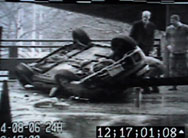
The former sheriff had sent this evidence package to Chief Kirkpatrick. The scrawled order on the package to return it unopened glared from the table like graffiti. This was the second time Kirkpatrick had violated the law, Bamonte told Burns, by failing to investigate a criminal complaint he had filed with her against the Cowles family. The first complaint concerned the April 8, 2006, death of Jo Ellen Savage in the Cowles family’s RPS parking garage. The chief “rat holed” the complaint by illegally handing it over to the FBI, says Bamonte. The FBI compliantly accepted the complaint, then handed it back to local authorities a year later, saying it had no legal authority to investigate the charges. That ran out the clock on the statute of limitations in Savage’s death, exactly as Bamonte had exhaustively explained would happen in a great deal of correspondence—part of his “chain of evidence”—a year earlier.
Here was a simple and viciously sinister plot line, he told Burns. Local law enforcement officials had enlisted willing state and federal law enforcement agencies to use the law to help the Cowles family violate the law. It was a perfect example of the virulent organized crime infecting Spokane. There was even a memo about an assistant state attorney general confirming this. Bamonte included it in the evidence he gave Burns. (See also “American Serbia,” posted below.)
Arrested Ombudsman
“Here, why don’t you read this first,” Bamonte politely suggested, putting a four-page memo summarizing the disc’s contents into Burns’s hands. The summary included Bamonte’s notification of Kirkpatrick that her inaction violated state law and city charter.
“Regarding: Organized crime involving Chief Kirkpatrick and numerous other appointed and elected officials,” the summary begins. It quickly explained Bamonte’s basis for charging the Cowles family with organized crime, at least as the FBI describes organized crime on its Web site and as it is defined by Washington State law.
The FBI, the former sheriff explained, defines organized crime as, “any group having some manner of a formalized structure and whose primary objective is to obtain money through illegal activities. Such groups maintain their position through the use of actual or threatened violence, corrupt public officials, graft, or extortion, and generally have a significant impact on the people in their locales, region, or the country as a whole.”
State law, he noted, reads: “For the purposes of RCW 43.43.850 through 43.43.864 ‘organized crime’ means those activities which are conducted and carried on by members of an organized, disciplined association, engaged in supplying illegal goods and services and/or engaged in criminal activities in contravention of the laws of this state or of the United States.”
Bamonte told Burns that among his evidence the ombudsman would find dozens of actions by the Cowleses, Cowles reporters, and public officials that matched federal and state organized crime statutes.
“In regards to the criminal complaint I filed against Mr. Baker and specific members of the Cowles family, I have been provided with the parcel numbers of 167 Cowles-owned properties,” Bamonte’s memo reads, in part. “During Mr. Baker’s tenure as assessor, he reduced the assessed valuation of 99 of these by millions of dollars. Also, 61 of the 167 Cowles-owned properties have not been increased in value over the last two to four years and, during his tenure in office, only seven out of 167 Cowles-owned properties were increased in assessed valuation – these seven appear to be involved with new construction. This is concerning because Mr. Baker has consistently raised the assessed property valuation for the majority of property owners in Spokane County, which is corroborated by approximately 3,000 property tax appeals he has received over the last year.”
Burns read Bamonte’s memo without looking up. He seemed… arrested.
Except for the ticking of a clock, the room was silent. The précis Burns read argued that Chief Kirkpatrick was protecting Cowles family members from being investigated for Class A felonies involving manslaughter and fraud in return for favorable coverage by Cowles media.
The chief scratched Cowles backs by making sure family members weren’t investigated for their crimes. The Cowleses scratched the chief’s back with press that made her look good. That was the burden of Bamonte’s evidence.
Christ gazed serenely from a portrait on one of the walls. “As for me and my family,” read a hanging on another wall, “we will serve the Lord.” Bamonte’s soft-spoken wife is responsible for that décor.
Décor on the front door, a computer-printed sign, is the former sheriff’s handiwork. “Warning,” it reads. “If you are a thief or burglar and break into our house, be prepared for an unpleasant surprise.”
A Simple Case of Property Assessment Fraud
Burns seemed a little stunned by Bamonte’s memo. By way of further orientation in the property assessment irregularities, Bamonte cited a few examples.
The first was the valuation of the Cowles family’s RPS parking garage. Less than two weeks after the Cowleses cashed the public’s $26 million check for the garage, they asked the city to reduce its assessed valuation to $14.5 million. The city agreed. The city even refunded the Cowleses $63,000 in building permit fees, based on the devaluation. Burns seemed startled.
This wasn’t the first time I had seen such a reaction to this evidence. I once covered a meeting between former Spokane City Councilwoman Cherie Rodgers and then-recently retired Washington State Supreme Court Chief Justice Richard Guy when Rodgers presented him the same evidence. Judge Guy said he found the evidence surprising. (See “Judge Guy Meets Cherie Rodgers” at www.camasmagazine.com.)
The former chief justice told Rodgers that although Spokane was his hometown, he wouldn’t live here.
“I’ve always considered this a company town, like a coal-mining town,” said Judge Guy.
It was understood that the owner of this particular company town was the Cowles family. The IRS reached a similar conclusion in its 2004 ruling that municipal bonds sold to finance the RPS parking garage violated federal tax code. (See “The Casino was Rigged” at www.camasmagazine.com.) All of this was included in the evidence package presented to the ombudsman of the Spokane Police Dept. by the former sheriff of Pend Oreille County.
As soon as Baker took office, Bamonte informed Burns, Baker further devalued the Cowles-owned RPS parking garage to $10.6 million.
“This is fifteen million dollars worth of assessment fraud any way you look at it,” said Bamonte.
He reminded Burns that one former Spokane County appraiser, Debi Mason, recently reported that she found $20 million of assessment fraud in her single assignment area. She said the fraud she discovered would inevitably run many millions higher when unrecorded improvements were figured in.
Another suspicious Cowles property assessment Bamonte called to the ombudsman’s attention involves more than 600 acres of land owned by Peggy Cowles at Nine Mile Falls. The property features its own private lake and several dwellings. Assessed valuation: $147,650, the same as a modest home in town. The assessor’s report indicates the property hasn’t been inspected in years and that the land was valued until this year at only $6,000.
Meanwhile, said Bamonte, the assessor’s office is being inundated with thousands of complaints about unfair assessment hikes.
Such complaints are inevitable, Mason recently told me. “When you give some property owners a break, you have to make other property owners pick up the difference in order to meet the county’s budget.”
Mason told me that she is frustrated by the indifference toward problems in the assessor’s office shown by all three county commissioners. She says she supports Bamonte’s call for an investigation into the valuation of Cowles properties, but she also believes, based on her personal experience, that a thorough investigation of the County Assessor’s office is needed.
The Cowles Media Weapon
Burns and Bamonte talked for a little over an hour. Bamonte told Burns that the key to the Cowles family’s extortion of Spokane is its century-old control of the region’s media. The Cowles family uses its media as a weapon, the sheriff told the ombudsman, rewarding with good press those who go along with its criminal activities, punishing those who don’t. Cowles media, he said, is a front for Cowles organized crime.
“This family does terrible things to good people,” Bamonte told Burns. “It’s been going on for more than a century.”
Now a historian who has published dozens of books, Bamonte read to Burns from one of the exhibits on the computer disc he gave him. It was from a front page January 4, 1905, Spokane Press story:
“If the public welfare happens to conflict with the private interests of this publisher [Cowles], the interests of the people must go to the wall. He will resort to the basest misrepresentation through his columns to punish the most reputable citizens in the community if they refuse to submit to his dictation.”
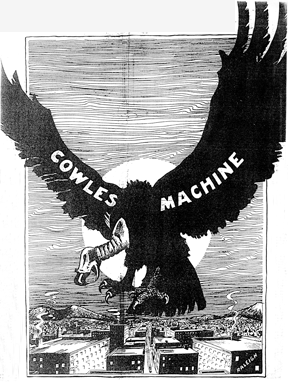
1915 cartoon from Spokane Press
Bamonte urged Burns to study the evidence of the Cowles family’s continuing criminal use of its media in the disc he gave him. Pay special attention, he told him, to the way the Cowles newspaper branded former Mayor John Talbott a “civic terrorist.” Talbott tried to expose the Cowles-engineered $23 million federal loan fraud that was a cornerstone of the family’s larger River Park Square shopping mall fraud. (For details, see “All in the Family” and “Inside Job” at www.camasmagazine.com.)
A perfect current example of Cowles media extortion, said Bamonte, is its coverage of the Spokane Police Guild’s recent no-confidence vote in Chief Kirkpatrick. Bamonte told Burns to check out E-144 and E-152 in his exhibit package. The first is an editorial the paper published on Sunday, April 18, 2010, about the guild’s no-confidence vote. The second consists of two articles the paper published three days earlier. E-152 contains two stories featuring information that contradicts E-144. You don’t need a jeweler’s loupe to see it.
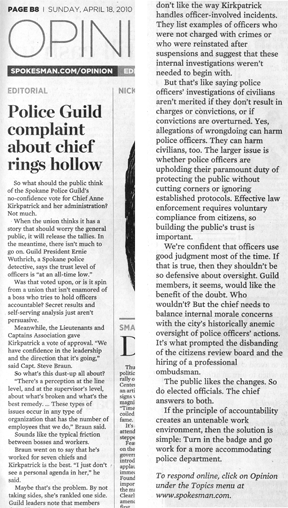 “Police Guild complaint about chief rings hollow,” reads the editorial’s headline. “So what should the public think of the Spokane Police Guild’s no-confidence vote for Chief Anne Kirkpatrick and her administration?” the Cowles paper asked. “Not much.”
The editorial suggested that the no-confidence vote was a vendetta against the chief by her department’s rank and file. The editorial questioned the refusal of the police union to release the count of its no-confidence vote.
“Was that voted upon, or is it spin from a union that isn’t enamored of a boss who tries to hold officers accountable?” queried the unsigned opinion. “Secret results and self-serving analysis just aren’t persuasive.”
“Meanwhile,” noted the editorial, “the Lieutenants and Captains Association gave Kirkpatrick a vote of approval.”
The problem, Bamonte explained to Burns, is that Kirkpatrick’s command staff, including her assistant chief, is now implicated in covering up evidence about how Otto Zehm, a mentally disabled 36-year-old janitor, died in 2006 when Spokane police arrested him. That is the subject of the first story in E-152.
The second story in E-152 quotes Kirkpatrick saying that the no-confidence vote “is a failed coup. … They [guild members] called for my firing and the mayor has made it very clear that’s not happening.”
The story also noted that, “Despite the vote, Kirkpatrick enjoys strong support from elected leaders.”
But these are the leaders, Bamonte informed Burns, that the evidence in his complaints makes clear are implicated in Spokane’s public corruption.
“Our elected officials serve the Cowles family, not the people of Spokane,” Bamonte told Burns. “Just look at the memo Mayor Verner wrote me saying she couldn’t take on the RPS fraud because of ‘the powers that be.’”
(Mayor Verner’s “powers that be” memo is included in Bamonte’s evidence package. See also, “American Serbia,” below.)
After three decades of covering the—how shall I say?—stunt journalism of the Cowles family, I, too, found E-144 and E-152 pretty acrobatic, even by Cowles standards. The opinion piece about the police guild’s no-confidence vote seemed to invert the evidence contained in the reporting that preceded it. I was so curious about the inconsistencies that I sent Spokesman-Review editor Gary Graham and publisher Stacey Cowles this email request:
“Mr. Graham: Please provide me with the name of the author of today’s Spokesman-Review opinion piece, ‘Police Guild complaint about chief rings hollow.’ I would like to interview the writer. I’m sure you’ll agree that ethical consistency requires that an editorialist and publication advocating police accountability similarly accept editorial accountability. Thank you for your assistance. Sincerely, Larry Shook.”
No answer so far.
Legendary Policeman
By the end of their meeting, the ombudsman seemed both fascinated and perplexed by what the former sheriff had told him
“I’m not sure what I can do about it,” Burns said.
“I’ll tell you exactly what you can do about it,” answered Bamonte. “You’ve been given a voice. You’re the police ombudsman. You can use your voice and call for a grand jury investigation. That is the only proper remedy here. You have to get this evidence in front of a jury.”
Bamonte’s words seemed to weigh on Burns.
“I do have a voice,” Burns agreed.
The ombudsman took his leave, promising to carefully study Bamonte’s evidence. He said he would print out the entire file and use a highlighter on it.
“I feel bad for him,” Bamonte said after Burns left. “He’s in the heart of corruption. He’s going to be fighting everybody. The criminals he’s facing hold the most powerful positions in society. Burns is all alone.”
Bamonte knows the feeling. He became a celebrity in 1989 when he solved the nation’s oldest open murder case. That colorful story of how the Pend Oreille night marshall was murdered by Spokane policemen during a Depression Era creamery robbery hit the front page of The New York Times, was featured in the Unsolved Crimes NBC TV show, and became the subject of a famous book, Breaking Blue. It was a dramatic story of police corruption that began with the Spokane Police Department and included the Spokane Sheriff’s Department, the Washington State Patrol, and the FBI. “A tale of rogue cops and their acts of treachery and violence,” The Los Angeles Times called it.
No one but the elderly children of the murder victim wanted to know what happened. The evidence fell in Bamonte’s lap. He investigated the murder because, under the law, it was his job. Solving that old murder case is far from what Bamonte considers his most significant achievement in law enforcement. He was a distinguished officer throughout his career.

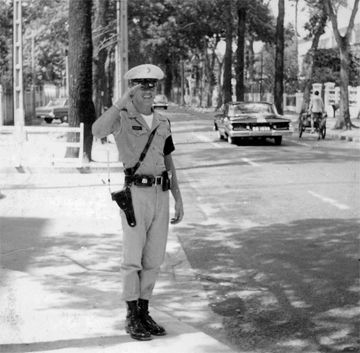
MP Bamonte in Saigon
As a young MP in Saigon, Bamonte was attached to the personal protection detail of U.S. Ambassador Henry Cabot Lodge. He and several other military policemen sat in a room with Lodge listening to the not-too-distant gunfire of the coup in which South Vietnam President Ngo Dinh Diem was assassinated.
In time Bamonte became a Spokane street cop. He was a member of SPD’s first SWAT team. Then a “wilderness sheriff,” as the national media dubbed him, in the northeast Washington woods where he grew up. He arrested maybe 15 murderers over the course of his law enforcement career.
As a Spokane motorcycle cop, Bamonte once roared onto the sidewalk at the front door of the Bon Marche department store minutes after a robber had murdered one of the store’s clerks. Bamonte ran inside. From a distance of 10 feet, the killer leveled his pistol at Bamonte’s head. Firing from the hip, Bamonte shot him between the eyes.
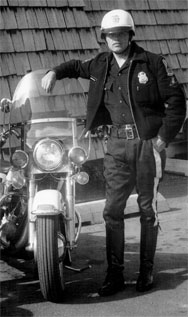 Twenty years after leaving law enforcement, people still regularly seek Bamonte’s advice about handling threats. He is considered such a moral authority on police matters that, a few weeks ago, he addressed a continuing education retreat of the Washington State Supreme Court. His subject: “How Police Biases Affect Police Investigations—Then and Now.”
I asked Bamonte what he would do in Burns’s shoes.
“My job.” he said. “That’s all a cop can ever do. The only way to do the job in this case is call for a grand jury. You have to get this evidence in front of a jury.”
One of the things that most upsets Bamonte is the way Chief Kirkpatrick has betrayed her officers.
“Most police officers aren’t just good, honest people, they are among the best of people,” says Bamonte, who holds a master’s degree in organizational leadership from Gonzaga University. “They risk their lives constantly for others. There are bad apples in every profession and organization. The first job of all leadership is keeping those bad apples from spoiling the others. That’s what’s so disturbing about what Kirkpatrick’s doing. She’s rendering criminal assistance to the Cowles family in return for good press. She’s sacrificing this community’s police force to do that. I can’t tell you how bad I feel about this.
“Chief Kirkpatrick unsuccessfully applied for the police chief jobs in San Francisco and Seattle. When you apply for these types of jobs, exceptional weight is given your resumé. She needs the goodwill of the media and, to benefit herself, she has stooped to the lowest possible level to get it. She has betrayed the trust of her department and our community. That betrayal seems to be working for her. As a result, she has received excellent press during her short tenure in Spokane. One Spokesman-Review article labeled her the best police chief in the history of Spokane,” said Bamonte.
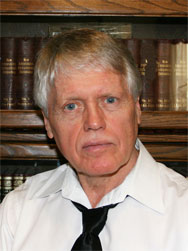
Tony Bamonte
“As writers and historians, my wife and I have studied all 32 former police chiefs. We wrote a book on the history of the Spokane Police Department. Since the Spokane Police Department was formed in 1881, Spokane has had some exceptionally honest and brave police chiefs whose accomplishments have been outstanding. The accomplishments of Chief Kirkpatrick seem to be going the other way. I think Kirkpatrick has actually made the job of her patrol officers even more dangerous by undermining the public’s trust and confidence in them.”
Endless Battle
As I left the Bamonte place that morning, I found myself wondering if Spokane Police Chief Anne Kirkpatrick might be the single most dangerous police chief in America.
I soon concluded that I have no way of knowing, of course. But just as quickly I concluded that it doesn’t matter. This is because of the evidence contained in Sheriff Bamonte’s exhaustive efforts. It clearly shows that Kirkpatrick is the most dangerous kind of police chief. This is because she represents lawlessness –the public corruption cancer referred to by Councilwoman Rodgers—instead of law.
I believe Kirkpatrick’s actions concern not just every citizen of Spokane, but every American citizen, because they reflect the loss of moral fiber in this nation’s government that threatens the very dream of freedom. The evidence is clear—it’s pathognomonic, as doctors say—that the disease of corruption in American government is too far advanced for government leaders to manage without active involvement from the nation’s citizens. Physicians can’t heal those who will not take responsibility for their own health.
What we have here, I believe, is nothing less than the age-old battle between corruption and virtue, between deceit and truth.
This is a crisis for which each of us bears personal responsibility. This blog represents a continuation of my efforts to discharge my responsibility.
If you want to share in that responsibility, you can take some action, however small. You can do something. You don’t have to do nothing. In fact, you can’t do nothing, because inaction feeds corruption even more than complicity.
Here are a few ideas of things you could do:
- Forward the link to this blog to everyone on your email list. Accompany it with a note about why you think it’s important. Ask your recipients to share their thoughts with you.
- Suggest that your recipients do the same thing with their contacts.
- Get together with friends and others and discuss this blog and the evidence it references. Brainstorm about actions that you and others can take. If you do this, you will be contributing to the welfare of all of us. If you don’t, you will be contributing to the great danger we all now share. There’s only one you. All of us desperately need your thoughts and voice.
- Send this link to your elected representatives and demand a grand jury investigation of Sheriff Bamonte’s evidence. Demand a response to your demand. Share that response with others, beginning right here. When you have made your demand, hit the comment button below and share your actions with others. When you have had your response, or no response, share it here, too.
- Hit the same comment button and share your thoughts right now.
- In a way that is consistent with your own beliefs, pray or hope for the outcome you desire (for yourself and those who will come after you). Meditate on its fulfillment. Dream about it. This is nothing less than the dream of freedom, a dream we can’t afford to lose, alone or together.
Documents
For brief descriptions of documents, see General Index of Evidence sent to Attorney General Eric Holder, April 1, 2010.
All of the individual documents presented by Sheriff Bamonte to Ombudsman Burns (most of which were also sent to Holder) are public records and may be obtained by contacting Mr. Burns, toburns@spokanecity.org, or Spokane City Clerk Teri Pfister, tpfister@spokanecity.org. RPS-related criminal complaints filed by Sheriff Bamonte with Spokane Mayor Mary Verner and Chief Anne Kirkpatrick are also public records. You may phrase your request: Dear Ms. Pfister: As provided for by the Washington State Public Records Act (RCW 42.56), please provide me with all public records concerning… and stipulate the records you seek. Similar criminal complaints filed by Sheriff Bamonte with Spokane County Sheriff Ozzie Knezovich and Spokane County Prosecutor Steve Tucker may be obtained in the same fashion by contacting county public records clerk James Emacio, jemacio@spokanecounty.org.







 Larry Shook.com